


Building skills for sustainable prevention of MSDs
Why do MSDs persist ?
MSDs are not only linked to repetitive movements or awkward postures. They often result from a combination of factors :
- Overall work organization ;
- Physical environment
- Lack of team awareness
- Absence of in-depth ergonomic analysis
- Difficulties in sustainably embedding good practices
Upskilling : a key driver of sustainable prevention
Developing the skills of employees and managers helps shift from a corrective approach to a preventive and autonomous one.
Understanding risks to act more effectively
It is essential to recognize that training teams enables them to:
> Identify risk situations ;
> Understand the mechanisms behind MSDs ;
> Adopt appropriate day-to-day behaviors.
Training and raising awareness among teams is a key driver for understanding MSD risks and anticipating the implementation of corrective actions.
Empowering stakeholders
A company that performs well in prevention is one where:
> Managers can detect early warning signs ;
> Employees actively contribute to improving their workstations ;
> Internal referents are able to analyze work situations.
Empowering teams makes them active participants in their own prevention and enables the implementation of action levers without requiring constant external support.
Embedding good practices over time
Consistency and ongoing support make it possible to:
> Avoid reverting to old habits ;
> Integrate prevention into the company culture ;
> Measure the concrete impact of implemented actions.
Embedding good practices relies on continuous support and consistent on-the-ground training. Raising awareness of risks and the work environment is essential to ensure the long-term success of the approach.
Training to drive lasting change in practices
Training should not be seen as a simple regulatory requirement, but as a true lever for transformation.
The most effective programs are built on content directly tailored to real workplace conditions, enabling participants to easily relate to their day-to-day activities. They also rely on concrete, hands-on scenarios that encourage learning by doing and help embed the right practices.
To ensure sustainable results, these approaches include follow-up over time, which is essential for anchoring changes and adjusting actions when needed. They are also part of a modern approach, based on data and movement analysis, making it possible to objectify risks and manage prevention actions in a precise and measurable way.
This is the approach behind the services offered by Moovency, which combine expertise in ergonomics, technological tools, and active learning methods.
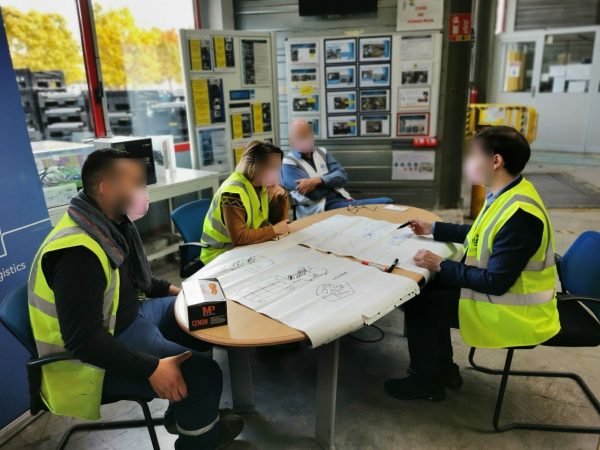
The importance of tailored support
Every company is unique: roles, constraints, internal culture… It is therefore essential to adopt a personalized approach.
Effective support makes it possible to :
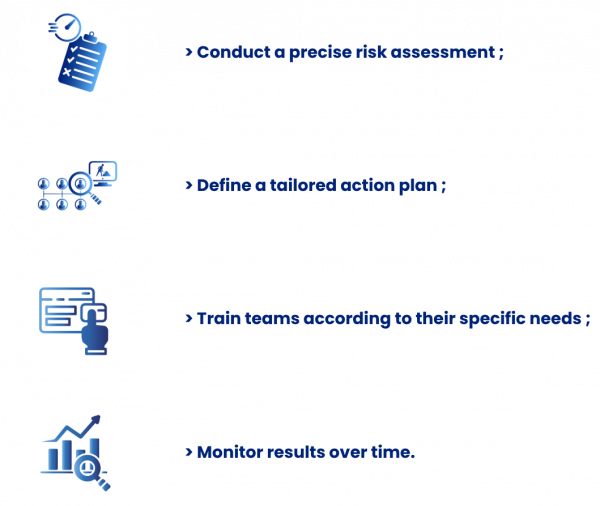
This comprehensive approach fosters sustainable and measurable prevention of MSDs.
Towards proactive and measurable prevention
Today, the most advanced companies no longer simply react to workplace health issues—they anticipate them.
Through upskilling :
> Risks are identified earlier ;
> Actions are more targeted ;
> Results are long-lasting.
These workshops and training sessions, led by ergonomics experts, allow for a precise adaptation to each company’s specific context and culture, thereby strengthening their effectiveness in the field.
As part of this approach, Moovency also offers gamified Safety Days, which act as a powerful engagement lever by raising employee awareness in a fun and interactive way while sustainably embedding best practices.
Above all, prevention becomes a driver of overall performance: employee well-being, reduced absenteeism, and improved productivity.
Conclusion :
Ultimately, the sustainable prevention of MSDs cannot be limited to one-off actions or purely technical solutions. It primarily relies on the progressive upskilling of teams, a thorough understanding of work situations, and a collective ability to take action over the long term.
By investing in training and support, companies do more than just reduce risks—they build a healthier, safer, and more high-performing work environment. Making MSD prevention a strategic lever means embedding workplace health at the core of overall performance in a lasting way.
Sources :
> INRS : https://www.inrs.fr/risques/tms-troubles-musculosquelettiques/facteurs-risque.html
> INRS : https://www.inrs.fr/risques/tms-troubles-musculosquelettiques/prevention
> FSIE Formation : https://fsie-formation.fr/articles/prevenir-les-maladies-pro-tms/