

Focus on a MSD #5 – Neck pain
Neck pain : definition
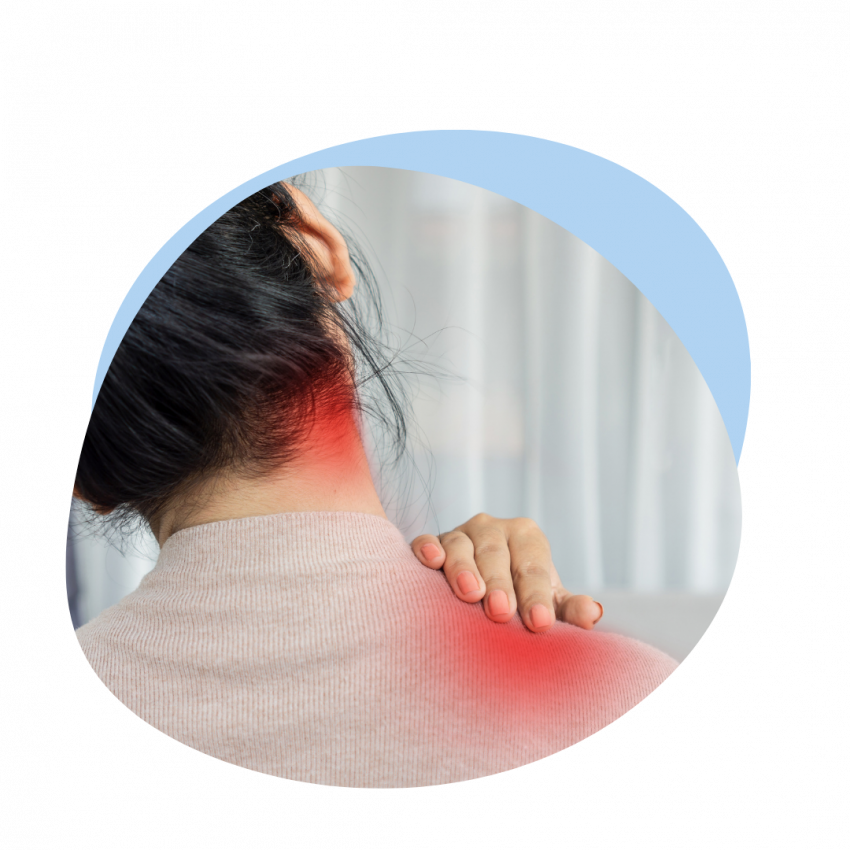
Neck pain refers to pain in the posterior region of the neck (the back of the neck). It can originate from different structures that make up the neck:
-
muscles, often tense (e.g., stiff neck / torticollis),
-
tendons and ligaments,
-
nerves or intervertebral discs.
Generally, the pain remains localized, but it can sometimes radiate to the shoulders or upper back. If it spreads to the shoulder or arm, it is referred to as cervicobrachial neuralgia, which indicates irritation of a cervical nerve.
Neck pain in figures
Neck pain is a condition often described as common:
→ In 2020, around 203 million people of all ages worldwide suffered from neck pain. (JIM)
→ In France, about two-thirds of the population will experience an episode of neck pain during their lifetime, and one in five people has had an episode lasting more than 30 days within the past year. (Ameli)
→ The prevalence of neck pain is higher in women. (JIM)
→ Estimates predict that the prevalence of neck pain will increase by +32.5% between 2020 and 2050. (JIM)
Specific Cases:
-
Cervicobrachial neuralgia: pain radiating from the neck to the shoulder and arm.
-
Arnold’s neuralgia: usually affects only one side, often triggered by certain head movements (extension/rotation).
Occupational Causes of Neck Pain
Certain professions carry a higher risk of neck pain due to repetitive or prolonged strain on the neck. Key contributing factors include:
→ Prolonged static postures: sitting for long periods, leaning forward, or keeping the head tilted.
→ Extended screen work
→ Repetitive movements: frequent head or shoulder motions
→ Operating machinery with rearward control
→ Lifting heavy loads: handling or transporting weight, especially when the neck supports the load
→ Stress and high work pace: muscle tension may develop in response to occupational stress
-
Office jobs (tertiary sector): Whether on-site or remote, sedentary work, forward head posture, and rounded shoulders, especially with poorly adjusted workstations (chair, screen, keyboard), increase muscle tension and compress cervical structures.
-
Construction and industry: Jobs involving heavy lifting, repetitive movements, or awkward postures place significant strain on the neck and shoulders.
-
Other high-risk professions: Drivers (truck, taxi, bus), surgeons, or any work requiring the head to remain still or tilted for extended periods.

Neck Pain: Diagnosis & Treatment
What to do in case of neck pain?
Depending on the intensity and duration of symptoms, it is recommended to consult a doctor for a clinical examination. Diagnosis is based on several elements:
→ Clinical examination: observation of posture, mobility tests, palpation of neck muscles and joints
→ Medical and occupational history: duration, intensity, and context of the pain
→ Additional tests: X-ray, MRI, or CT scan may be prescribed if a structural problem is suspected or if pain persists
Note: Neck pain is considered acute if it lasts less than 6 months and chronic if it persists beyond that period.
Treatment Options :
Medication: Pain relievers and anti-inflammatory drugs to reduce pain; muscle relaxants for muscle spasms.
Orthopedic treatment: Cervical collar (neck brace), used only in certain acute cases and for a limited duration.
Rehabilitation and physiotherapy:
-
-
Exercises: Mobility and strengthening exercises for the neck and back
-
Manual therapies: Massage, stretching, and targeted physiotherapy sessions
-
Preventing Neck Pain: Habits that can help
To reduce the onset or recurrence of neck pain, adopting good daily habits is essential:
Monitor posture: avoid forward head tilt and rounded shoulders.
Regular physical activity
Use appropriate bedding: a pillow that is neither too firm nor too soft, suited to your body shape; if possible, avoid sleeping on your stomach.
Relax the neck: gentle stretches, self-massage, and relaxation exercises.
In specific situations:
Working at a screen: adjust your workstation—screen height, chair position, keyboard, and mouse placement—to reduce neck strain.
In the car: adjust the headrest and seat distance to minimize neck fatigue and tension, and always wear your seatbelt.
Sources :
Améli – Dossier Cervicalgie (douleur du cou) https://www.ameli.fr/assure/sante/themes/cervicalgie
Arthrose Cervicale – Les métiers qui sollicitent excessivement la nuque https://www.arthrose-cervicale.fr/arthrose-cervicale-les-metiers-qui-sollicitent-excessivement-la-nuque/
Journal international de Médecine (JIM) – Cervicalgies en hausse : un enjeu mondial d’ici 2050 https://www.jim.fr/viewarticle/cervicalgies-hausse-enjeu-mondial-dici-2050-2025a10002lj
Would you like to find out more about the various musculoskeletal disorders? Check out our related articles!