


Recognizing and anticipating pain from a MSD
Preserving workers’ health and reducing absenteeism
Understanding what an MSD is
Musculoskeletal disorders (MSDs) refer to a group of conditions affecting:
> muscles ;
> tendons ;
> nerves ;
> joints.
They usually develop gradually as a result of repeated strain : repetitive movements, awkward postures, handling loads, or insufficient recovery time.
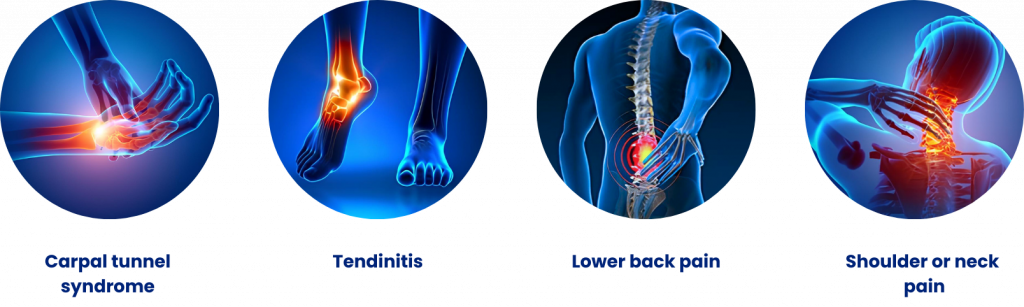
These disorders can progress from mild discomfort to an inability to work if they are not addressed promptly.
Early warning signs not to ignore
Pain does not appear suddenly. It is often preceded by warning signs that workers sometimes learn to ignore in order to continue their tasks.
The most common signs are :
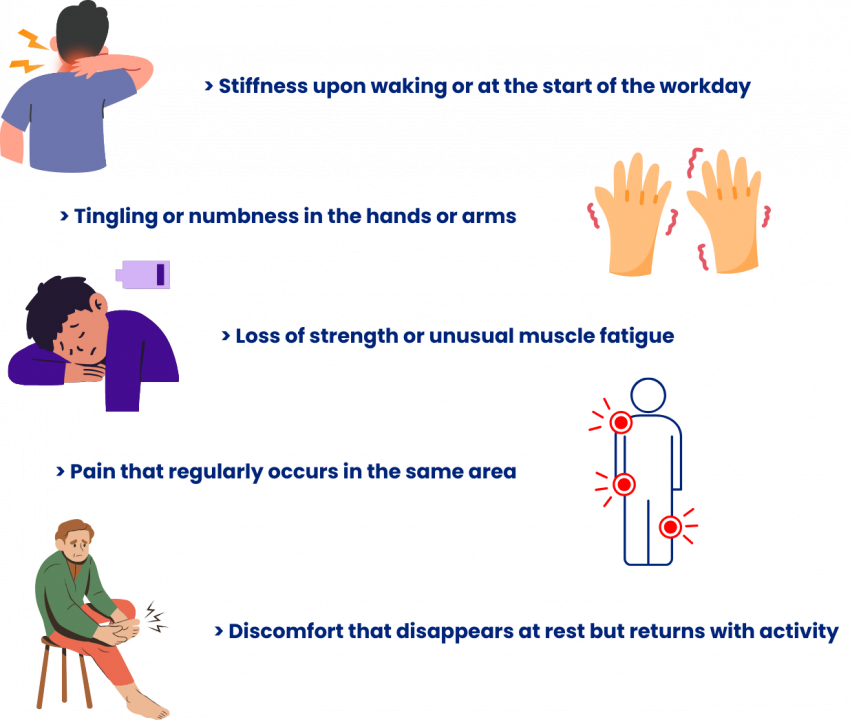
Recognizing these warning signs makes it possible to act before chronic pain sets in.
Why anticipating pain is essential
Ignoring early symptoms can lead to several consequences.
Worsening of the condition
A mild pain can develop into long-term inflammation, requiring sick leave or medical care.
This progression may be sudden or gradual—the key is to remain attentive to the body’s warning signals.
Decreased performance
Pain naturally—and often unconsciously—alters movements and posture. This can lead to:
> increased fatigue ;
> reduced precision ;
> a higher risk of accidents.
Impact on absenteeism
MSDs account for a significant share of sick leave. For organizations, this means:
> unexpected staff replacement ;
> increased workload for remaining teams ;
> decline in service quality.
Preventing these situations requires a culture of prevention and active awareness of the body.
Best practices to prevent MSDs
Several simple actions can help reduce risks.
Adopt proper movements and postures with a few key habits:
> keep loads close to the body ;
> avoid twisting the back ;
> use leg strength rather than the back ;
> change positions regularly.
Organize work effectively
Prevention is not solely the responsibility of individuals—organization plays a key role:
> task rotation ;
> regular breaks ;
> appropriate equipment ;
> training in proper techniques.
Encourage early reporting
Workers should feel comfortable saying: “I have pain” or “This movement is becoming difficult.”
The earlier pain is reported, the easier it is to implement solutions. Communication is therefore essential in preventing MSDs.
Building a sustainable prevention culture
Recognizing and anticipating MSD-related pain is not only an individual health matter—it is also a collective challenge for organizations. By acting early, it is possible to sustainably preserve team skills and maintain performance at work.
This approach also helps improve quality of life at work by reducing daily discomfort and pain. It contributes to lowering absenteeism related to musculoskeletal disorders and fosters a calmer, more supportive work environment.
Finally, anticipating these risks helps make interventions safer and ensures better working conditions for all employees.
Investing in prevention means protecting both workers and the organization.
Conclusion
Pain related to MSDs does not usually appear overnight. It develops gradually, often starting with minor discomfort that tends to be ignored in daily work. Yet these signals are valuable—they indicate that the body is beginning to reach its limits.
Learning to recognize these signs, adapting movements, and encouraging open dialogue about physical health are essential steps to prevent conditions from worsening. Prevention does not rely solely on workers themselves—it also involves work organization, the tools provided, and careful attention to working conditions.
By taking these early warning signs seriously, it becomes possible to sustainably protect team health while reducing sick leave and its impact on operations. Ultimately, anticipating pain means enabling professionals to continue performing their jobs in good conditions over the long term.
Sources :
> INRS : https://www.inrs.fr/risques/tms-troubles-musculosquelettiques/ce-qu-il-faut-retenir.html
> INRS : https://www.inrs.fr/risques/tms-troubles-musculosquelettiques/prevention
> EU OSHA : https://osha.europa.eu/en