

Making Risk visible to strengthen prevention: the case of LFB Biomédicaments
LFB, expertise committed to life
Founded in 1994, the LFB Group is a leading French biopharmaceutical company specializing in the development, manufacturing, and marketing of plasma-derived medicinal products and recombinant proteins. As the only plasma fractionator on the national territory, LFB transforms plasma into medicines to ensure that patients suffering from serious and rare diseases have safe and continuous access to the treatments they depend on. LFB markets around fifteen biopharmaceutical products in approximately thirty countries.
Today, LFB represents:
in the world in 2024
In France
In France
It’s on the production site dedicated to the manufacturing of plasma-derived medicinal products, located in Les Ulis (Essonne), that our feedback takes place.
An expertise dedicated to life… and to prevention
Beyond its scientific know-how, LFB fosters a genuine prevention culture. Its occupational health teams are committed to protecting employee health and safety in a highly constrained environment (cold, load carrying, manual handling, confined spaces, sustained pace, etc.).
Among these professionals, Adeline SAGALLE and Patricia SOYER, occupational health nurses at the Les Ulis site, pay particular attention to making risks visible, strengthening internal awareness, and implementing tools to support a robust safety culture.
It is within this context that KIMEA was introduced, with a clear objective: making risks visible in order to better protect teams and support evidence-based prevention actions.
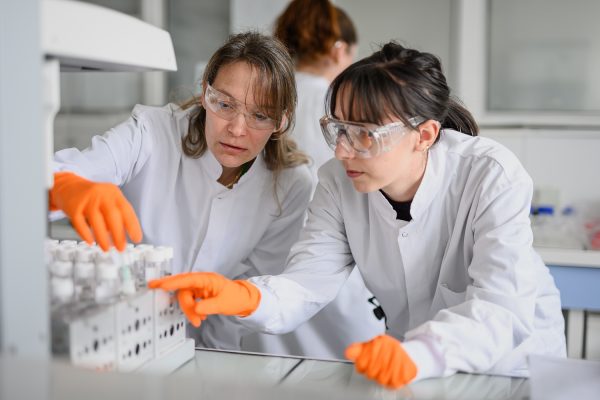
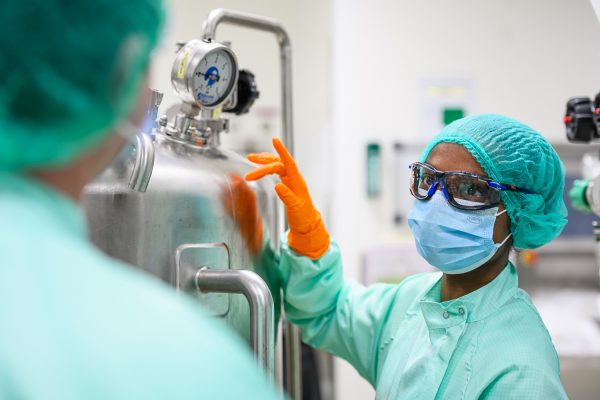
Photo credits: LFB
From medical monitoring to risk prevention
Adeline Sagalle and Patricia Soyer structure their work at the Ulis site around the regulatory requirements of their profession. Their daily routine is driven by medical consultations (pre-employment and periodic visits), along with responding to everyday health concerns raised by employees.
Beyond these core missions, they also play a key role in internal training. Patricia leads the training sessions on ergonomics and safe movement techniques, with Adeline providing support, and both of them contribute to the company’s First Aid at Work training programs. They also have expertise in ergonomics, which they use to support workstation adaptations, both in office settings and in industrial environments.
Before KIMEA: How to make existing risks visible?
Certain positions expose teams to constraints that may lead to musculoskeletal disorders (MSDs).
This is not necessarily related to repetitive movements in the strict sense of the Labor Code or INRS standards, but rather to repeated movements.
Adeline SAGALLE
Occupational health nurse at LFB
For example, technicians handling and sorting plasma bags perform repeated movements, in cold environments (around 4°C) and with varying loads. Production operators, for their part, work in sometimes confined spaces and must push, pull or carry heavy equipment. Individually, these gestures are part of the job; but when combined, they gradually create conditions conducive to the development of MSDs.
After several years, with investigation files that were sometimes long and complex to complete, multiple occupational diseases were officially recognized.
For Adeline and Patricia, this situation confirmed a need they had already clearly identified: it had become essential to make risks visible, understandable and objectively measurable.
Although the risks were known—thanks in part to the work Patricia had already carried out and her expertise in ergonomics—it remained difficult to materialize them in a sufficiently factual way. Until then, she relied on photos, videos, sketches or manual scoring grids.
As part of the national TMS Pros program, they were looking for a tool that would allow them to continue their efforts and concretely illustrate how these disorders appear. A more modern solution capable of turning their observations into measurable data, visual outputs and reliable indicators—going beyond the usual “we know this posture is harmful.”
It was in this context that a fellow safety professional, during a visit to a trade fair, discovered KIMEA and immediately saw its potential to address these challenges.
KIMEA, a catalyst for field-driven action
A key asset in manual handling and posture training
KIMEA has become a central tool for tailoring manual handling and posture training to real working conditions. The teams film work situations beforehand and integrate these excerpts into their training sessions, making prevention more tangible and directly applicable.
A decision-support tool for industrial projects
The tool is also used in industrial projects to anticipate the impact of new layouts on operators, thanks to simulations carried out with a diverse panel of employees.
A documented basis for exchanges with occupational health
Lastly, KIMEA facilitates communication with occupational health services by providing data and videos that help objectify situations and monitor how workstations evolve over time.
The tool isn’t used on a daily basis, but each intervention involves a significant amount of work, often involving an entire workshop. More and more managers are now spontaneously requesting the tool. This comprehensive approach is helping to gradually reinforce a culture of prevention.
Reception and perception of the tool
The arrival of the tool has changed the way results are presented. Its visual nature makes the feedback much more concrete.
Employees can immediately see which postures are good or bad for their joints, which provides strong educational support for training courses. Although preparing these materials requires more work upstream, it significantly increases the impact of the actions taken. The color code makes it easier to understand immediately, and the visual feedback captures more attention.
Some employees even request the use of the tool on their own initiative, particularly during medical visits, to objectify a situation they perceive as constraining. This approach makes it possible to precisely document the job’s constraints and support both the recommendations and the medical file.
The tool doesn’t create new findings: it simply highlights what has already been said. This aspect reinforces the credibility of the diagnosis and makes it possible to bring about change.
Initial improvement actions
The first studies conducted in the laboratories made it possible to implement concrete actions.
For example, some seating was not suitable and required adjustments. In this context, the team called on a specialist ergonomic equipment provider to modify the technicians’ setup and improve their working comfort.
These changes are easier to implement in laboratories than in production, where constraints are stronger. Premises are often cramped, metal tanks weigh several hundred kilos, and pharmaceutical regulations are strict, limiting the scope for modifications. In these conditions, interventions are generally corrective and targeted, adapted to individual situations.
Nevertheless, the tool has made it possible to prioritize actions, guide decisions, and progressively identify other areas for improvement.
What’s next?
Harmonizing practices across other sites is the first priority. Regular video meetings with teams from the other locations allow exchanges on the use of the tool and planning its deployment beyond the Ulis site. The goal is to present KIMEA to these teams by the end of 2025, with the next steps being local training on the tool and fostering professional and field-based exchanges.
In parallel, Adeline and Patricia plan to extend KIMEA’s use to other sectors and production workshops. This involves filming workstations, updating the risk mapping, and fully leveraging other KIMEA modules, such as the one dedicated to manual handling.
The ambition is to achieve a comprehensive and standardized view of risk situations, while adapting interventions to operational schedules.
KIMEA en une phrase ?
It’s a tool that has made it possible to objectify and highlight, in a clearer way, the issues observed across various work situations within the company.
Adeline SAGALLE
Occupational health nurse at LFB
Thank you to Adeline Sagalle and Patricia Soyer for this opportunity to exchange ideas. And a big thank you to the LFB teams for their trust!